
 Support
 Sign In
 Cart
Cart


Industrial hardware is, honestly, the unsung hero of manufacturing, construction, and maintenance. Whether you’re speccing out a new line or chasing down a nagging vibration, these components—fasteners, hinges, mounting kits, all that—are what keep the wheels turning (sometimes literally) and your uptime numbers looking respectable.
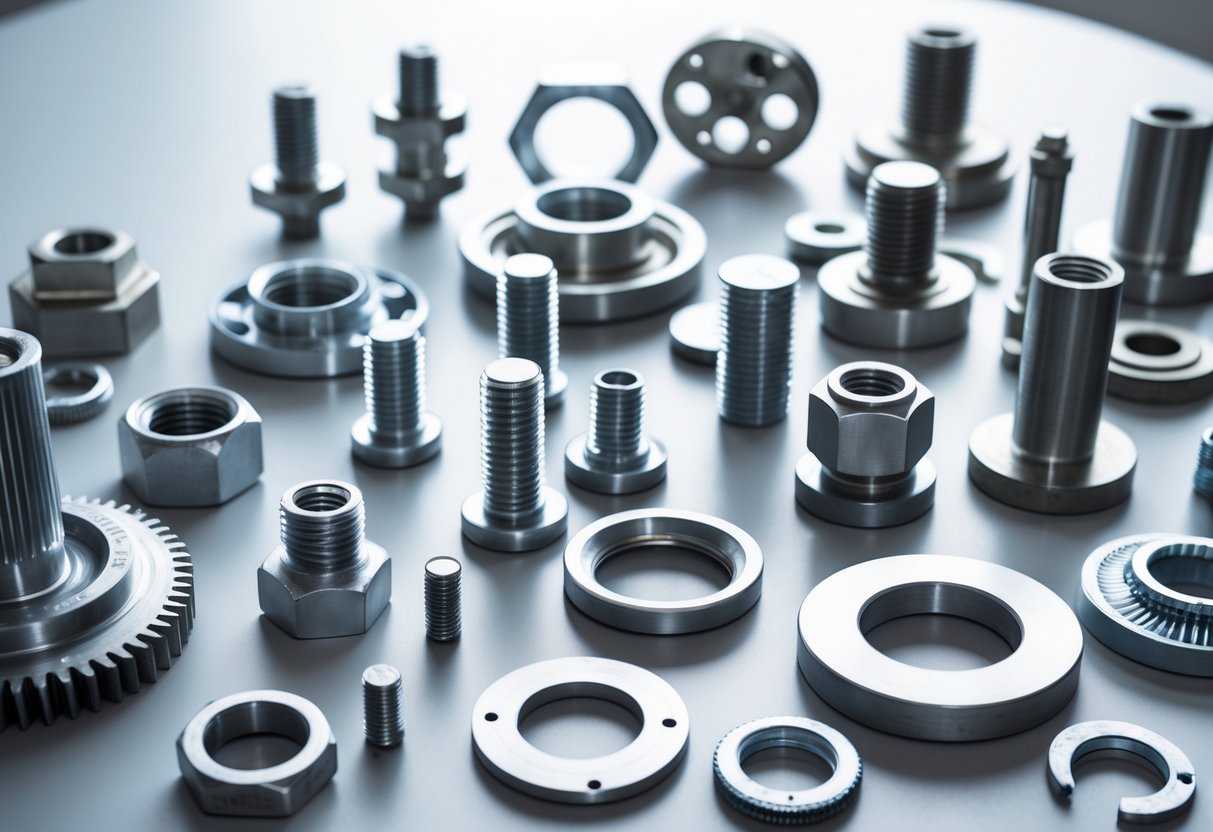
Industrial hardware covers everything from the most generic fastener to highly engineered, application-specific pieces that connect, mount, or secure equipment and structures in commercial and industrial settings. Think of it as the glue and scaffolding of the whole operation: nuts, bolts, locking systems, brackets, clamps, and every oddball attachment you only realize you need when you’re already on a deadline.
Knowing what’s out there and where to source it? That can be the difference between a smooth install and an expensive delay. Let’s get into the main categories of industrial hardware and see how the right distributor or manufacturer can help you stay on track, whether you’re after standard SKUs or something custom-fabbed for that one weird machine.
Core Industrial Hardware Components
Industrial hardware is the physical kit that lets machinery, assemblies, and structures actually work, even when things get rough. It’s everything from basic fasteners to purpose-built mechanical bits that allow for movement, access, or securement.
Fasteners: Bolts, Nuts, and Screws
Bolts, nuts, and screws are the real backbone of any assembly. Bolts get paired with nuts for removable joints, while screws tap straight into material or pre-threaded holes.
Common Fastener Types:
- Hex bolts – Go-to fastener, hex head, wrench it down, move on.
- Carriage bolts – Rounded heads, square necks, good for wood or where you don’t want spin.
- Machine screws – Fine threads, mostly for metal-to-metal, panel work, or mounting.
- Self-tapping screws – Cut their own threads, super handy for sheet metal or field fixes.
Material choice is always a balancing act. Stainless is the default for food plant or outdoor work, but sometimes you need the brute strength of Grade 8 steel for heavy-duty jobs. Thread pitch, diameter, length—get those wrong and you’re asking for a call-back or worse, a line stoppage.
If you’re not already checking head marks, you should be. Those little numbers and lines tell you exactly what you’re working with in terms of tensile and yield strength.
Handles, Hinges, and Door Holders
Handles are your user interface—literally. Lever handles are great for quick access, especially if you’re wearing gloves, while recessed handles are perfect when you want to keep things flush and snag-free.
Hinges are one of those “set it and forget it” pieces, until you spec the wrong one and a door sags or binds. Butt hinges cover most basic doors, continuous (piano) hinges spread the load, and heavy-duty hinges are a must for big panels or equipment covers. Always check your load ratings and cycle counts—nobody wants to replace a hinge six months in.
Door holders keep things open so you don’t have to. Spring-loaded for a bit of resistance, magnetic for a cleaner look and easy release. It’s all about matching the holder to the door weight and how it’s mounted.
Latches, Draw Latches, and Catches
Latches are what keep things shut but still accessible. Compression latches are a favorite for electrical enclosures—pulls the door tight, keeps the gasket compressed so you don’t get dust or water ingress. Toggle latches are nice for toolboxes or anything you want to open and close quickly.
Draw latches let you fine-tune the clamping force, which is great if you’re dealing with gaskets or slightly uneven surfaces. The adjustability helps with production tolerances, so you’re not fighting fitment issues down the line.
Latch Selection Criteria:
- Required holding force
- Environmental exposure—are you outside, inside, near chemicals?
- Security—do you need keyed access?
- Vibration—will it shake loose?
Catches are the simple cousins to latches: ball detents, spring-loaded, or magnetic. Roller catches are popular for frequent-access doors, while magnetic catches are a staple for control cabinets.
Gaskets, Springs, and Drawer Slides
Gaskets are the unsung MVPs for sealing and vibration damping. Rubber for water, closed-cell foam for dust, metal for high-heat or chemical resistance. You want just enough compression to seal, not so much that you crush the gasket and shorten its life.
Springs are everywhere—compression for shock absorption or contact pressure, extension for return mechanisms, torsion for hinges or counterbalances. If you’ve ever spec’d a spring, you know the pain of getting the force curve just right.
Drawer slides are more critical than most people realize. Ball-bearing slides are standard for heavy loads, and soft-close features are a must if you’re tired of slammed drawers. Always check load ratings, extension lengths, and cycle requirements. Full-extension slides are pretty much the norm now, but over-travel options are out there if you need to get all the way past the cabinet face.
Industrial Hardware Solutions and Services
A good industrial hardware supplier isn’t just selling you parts—they’re offering a whole package, from off-the-shelf standards to custom jobs, with engineering support and even lot traceability if you need it for compliance or quality audits.
Custom and Standard Hardware Solutions
Most distributors keep deep stock on the basics—bolts, nuts, washers, anchors, brackets—ready to ship for MRO, OEM, or construction. But it’s the custom side that separates the real players from the pack. When the catalog doesn’t have what you need, you want a supplier who’ll sit down, review your prints, and help you engineer a solution.
Custom work often means CAD support, prototyping, and sometimes even patentable new products. The best shops can handle both short runs and full-scale production, with machining, certification, and lot control baked in. Quality documentation is non-negotiable, especially for regulated industries.
Customer Service and Support
In my experience, the best hardware vendors have tech-savvy support teams who know their inventory and can actually help you solve problems. Field reps and product specialists who’ll come out, look at your setup, and help you spec the right parts? That’s worth its weight in gold.
You want a partner who’s responsive, helps with alternatives if a part’s backordered, and can walk you through the tradeoffs between off-the-shelf and custom. The goal is always to hit spec, keep costs reasonable, and avoid nasty surprises at install.
Most of the top suppliers can match OEM service levels, but with better lead times and pricing. From first call to install, it’s about making sure you get what you need, when you need it, and it actually works in the field.
Key Providers and Contact Information
Industrial Hardware & Specialties, Inc. is a go-to for a lot of us in the hardware buying world—full-service distributor, manufacturer, you name it. They’re at 17-B Kentucky Ave, Paterson, NJ 07503-2506, and that spot doubles as their main office and warehouse. Handy if you need domestic or even international fulfillment without extra headaches.
Contact Details:
- Toll-Free Phone: 800-684-4010
- Fax: 973-684-3095
- Business Hours: Monday-Friday, 7:30 AM – 5:00 PM EST
- CAGE Code: 1YKN4
There’s a pretty robust network of national distributors out there with a focus on vehicle hardware, specialty components, and all the fasteners you could possibly spec for a project. Most are set up to serve civil, defense, and military contracts—AS9120B and ISO 9001 are standard, so you’re not rolling the dice on quality. You’ll find coverage at more than 50 locations, and with over 1,700 folks on the payroll, support for industrial supply chains is rarely an issue.


