
 Support
 Sign In
 Cart
Cart


Modern construction sites aren’t what they used to be—nowadays, it’s all about data-driven approaches. Concrete sensors, in particular, have become one of the most game-changing tech upgrades in the industry. These wireless gadgets keep tabs on crucial properties like strength, temperature, and moisture as concrete cures, so teams can stop guessing and actually see what’s happening in real-time instead of waiting for lab results.
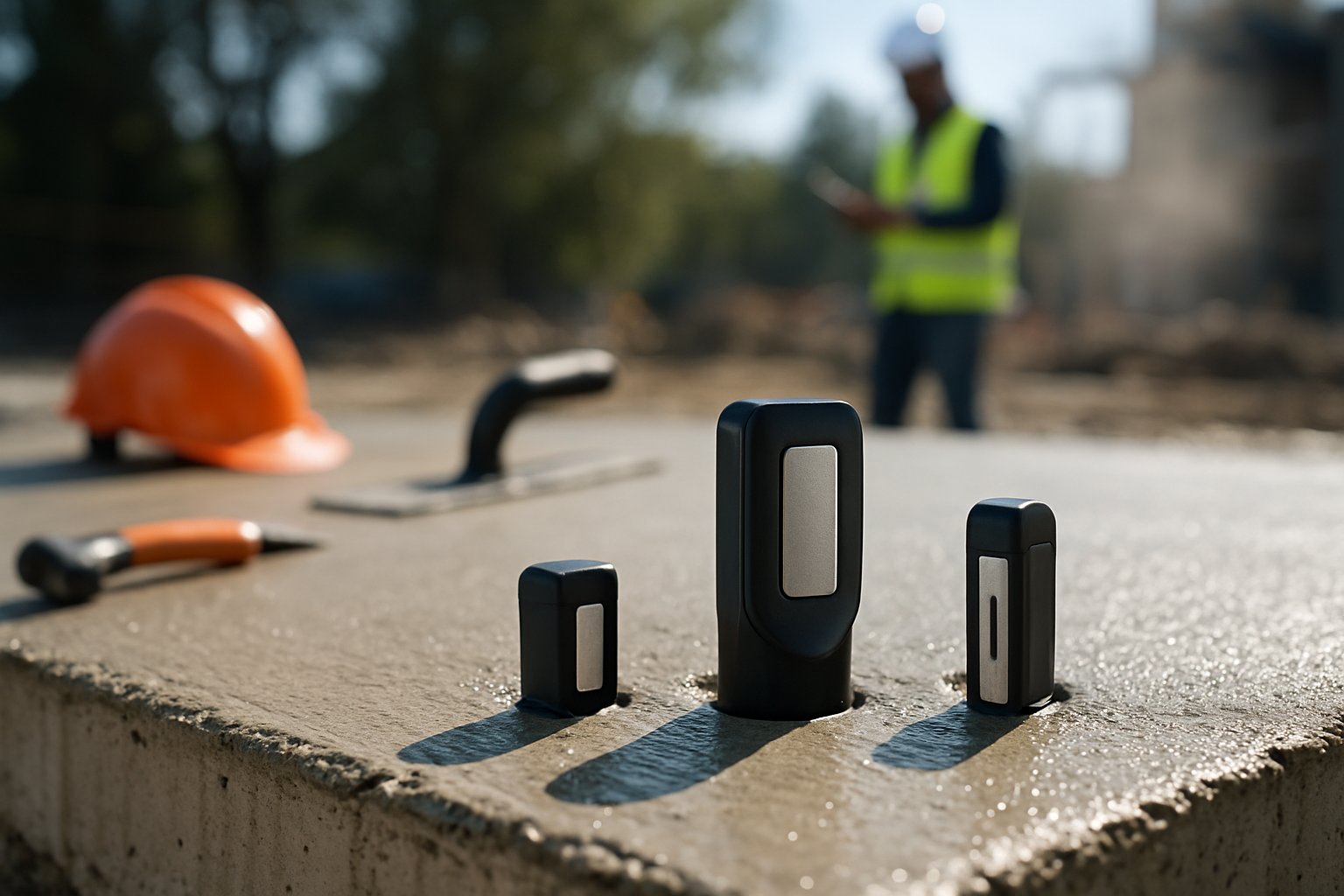
Continuous monitoring from concrete sensors means contractors can avoid delays and reduce safety risks, making it easier to choose the right moment for formwork removal or loading. It’s a big shift—no more crossing your fingers and hoping the concrete is ready; now you know.
Let’s dig into what kinds of sensors are out there, check out some of the latest breakthroughs from top brands, and see how these tools are changing the game for different types of projects. Whether you’re looking at embedded wireless systems or phone-connected gizmos, knowing your options just makes sense.
Understanding Concrete Sensors and Their Role in Construction
Concrete sensors give contractors a live feed of temperature, humidity, and maturity data during projects. That means tighter quality control and a much easier time meeting standards like ASTM C1074.
What Are Concrete Sensors?
Think of concrete sensors as specialized monitors—either embedded right in the concrete or stuck to its surface—to keep track of what’s happening as it cures and ages. They measure things like temperature, humidity, strain, and maturity, and they do it constantly.
Most modern sensors use wireless or Bluetooth connections, so you can pull data straight to your phone or tablet. They’re always watching the temperature and other variables, which helps spot how strong the concrete is getting and how the curing is going.
What do they measure, exactly?
- Internal concrete temperature
- Ambient humidity
- Maturity index
- Strain and stress
- Crack formation
Temperature is a big one—it tells you when it’s safe to take off formwork or start loading. Humidity matters, too, since it affects how strong the concrete will end up.
Key Applications in Modern Projects
You’ll find concrete sensors on all sorts of sites, especially where timing and quality are non-negotiable. Big projects lean on these devices to tweak curing schedules and cut down on wasted materials.
Where do they shine?
- High-rise buildings
- Bridges and infrastructure
- Precast concrete plants
- Cold weather pours
- Massive concrete placements
There’s also a neat twist: piezoelectric sensors in roads can track traffic loads and flow. That info is pretty valuable for transportation folks. Industrial sites use sensors to watch for foundation settling or structural movement over time. It’s a proactive way to spot problems before they get expensive.
Importance of Quality Control and Compliance
Standards like ASTM C1074 demand accurate temperature data during curing. Concrete sensors make it simple to gather and document exactly what’s needed. Relying on real-time maturity data beats traditional “wait and see” methods. You don’t risk loading too early or wasting time waiting longer than necessary.
Why bother?
- Automatic temperature logs
- Proof of proper strength development
- Lower risk of liability
- More accurate scheduling
Sensor data helps teams decide when it’s safe to remove forms, tension cables, or load the structure. Less guesswork, more confidence, and fewer delays.
Advancements in Concrete Sensor Technology
Concrete sensors have come a long way—wireless tech, IoT, and even AI are all in the mix now. Real-time monitoring is just the start; these systems can even predict what’s coming next.
Wireless Concrete Sensors and Signal Range
No more running cables everywhere—wireless sensors have made things a lot simpler. They send out data on temperature and strength without needing to be plugged in.
Signal range depends on the environment and the sensor itself. Most decent wireless concrete sensors work within 100 to 300 meters of their base station. Steel rebar and dense concrete can sap the signal a bit—sometimes by as much as 40%.
Battery life is usually a year or two, maybe three, depending on how often they transmit. There are solar-powered options if you can get them some sun. Some use low-power protocols like LoRaWAN to stretch battery life.
Reliable signals matter most when the sensors are buried for good. Some companies are adding mesh networking, so if one sensor can’t talk to the base, it’ll bounce data off its neighbors.
Integration with Internet of Things (IoT)
IoT has turned concrete sensors into part of a bigger, always-connected system. Data streams into the cloud, where you can check it all on a dashboard or your phone. If concrete gets too hot or cold, you’ll get an alert right away. Project managers don’t have to drive to the site every time there’s a question—just check the app. These sensors can link up with other systems, too. They share info with project management software and BIM platforms. Weather data and other environmental info can be pulled in to give a fuller picture. Cloud storage means you can look back at old projects, spot patterns, and fine-tune your approach for next time.
AI-Powered Analytics for Construction
AI is getting in on the action, analyzing sensor data to predict when concrete will hit target strength and flagging issues before they become big problems. Machine learning sifts through temperature curves, weather, and mix details to forecast how things will turn out.
Sometimes, AI will catch weird curing patterns or temperature spikes that people might overlook. Early warnings like that can keep projects on track. Predictive analytics help teams plan pours and removals more accurately. AI even takes weather forecasts and past data into account to suggest the best timing. It’s all about pattern recognition—AI can spot how different mixes and conditions affect results, and then recommend tweaks to cement content or curing methods.
Spotlight on Leading Solutions and Brands
Some brands have really pulled ahead in the concrete sensor world, especially with wireless temperature monitoring, strength assessment, and data analysis. SmartRock sensors, cloud platforms, and AI-driven tools are setting the pace.
Giatec and the SmartRock System
Giatec’s SmartRock sensors changed things up by ditching wires and manual data entry.
With SmartRock, you get real-time temperature and strength maturity readings. You can monitor max and min temps, plus differences across a pour.
Why people like SmartRock:
- Wireless, so no cable mess
- Tracks temp and maturity
- Sends alerts as things change
Sensors go right into the concrete as it’s poured, so there’s no disruption. Some teams say they’ve cut project time in half compared to old-school testing. Less manual labor, too.
Giatec 360 and Cloud-Based Platforms
Giatec 360 takes things further, giving you a cloud-based platform for managing multiple sites and sensors. You can pull up old data, make compliance reports, and spot trends from anywhere. The platform supports ASTM C1074 and other standards.
What you get:
- Dashboards for all your projects
- Automatic reports
- Historical analysis
- Works on mobile devices
Remote monitoring is a breeze, and managers get pinged when strength targets are hit. It even syncs with ready-mix suppliers for smoother scheduling.
Roxi and Predictive Strength Modeling
Roxi is Giatec’s AI tool for predicting concrete strength. It crunches sensor data and mix info to forecast how strength will develop.
Predictive modeling means less waiting on break tests—you get a sense of strength progression ahead of time.
Roxi learns from each project, getting better at predictions as it goes. Paired with SmartRock, it automates strength calculations, so there’s less room for human error.
The AI considers everything—weather, mix, curing process—so its estimates are more reliable than just looking at temperature.
Optimizing Concrete Operations with Sensors
Sensors have made it a lot easier to keep projects moving and stick to timelines. By keeping tabs on temperature, resistivity, and strength, teams can make decisions faster and spend less.
Monitoring Concrete Curing and Strength
Embedded sensors track curing conditions by constantly measuring temperature and humidity. This tells you exactly when strength thresholds are reached—no more guessing.
What to watch for:
- Temperature changes through the slab
- Electrical resistivity shifts (shows strength progress)
- Maturity index for predicting strength
Sensors help you see how temperature affects hydration—warmer concrete cures faster, colder slows things down.
If sensors show curing isn’t going well, you can tweak the process: add heat, insulate, or adjust steam curing as needed.
Strength prediction gets a lot more accurate with sensor data. Instead of relying on a few cylinder tests, you get a continuous readout.
With all this real-time info, you can avoid both premature loading and unnecessary waiting, making decisions with a lot more confidence.
Accelerating Formwork Removal and Post-Tensioning
Smart sensors are changing the game when it comes to timing formwork removal. Instead of just waiting out the usual periods, we’re actually tracking concrete strength as it develops—way more reliable, honestly. That means projects can move forward faster without cutting corners on safety.
We usually pull the forms once the sensors say the concrete’s hit at least 70% of its design strength for vertical elements. No more guessing or playing it overly safe just because “that’s how it’s always done.” It’s all about the numbers now, and that really trims down the schedule.
Post-tensioning operations get a big boost from this too. With sensors, we know exactly when the concrete’s tough enough for those forces—generally somewhere between 3,000 and 4,000 psi, but it depends on what the design calls for. Temperature swings can be a headache, especially early on. If the sensors pick up on risky temperature differences, we’ll tweak the post-tensioning timing to dodge any cracks or structural issues.
Honestly, this sensor-driven timing can shave 20-30% off the construction schedule compared to old-school methods. Once we’re sure the concrete’s ready, we don’t wait around—we just keep things moving. Sensors keep working long after post-tensioning, too. They’ll flag any stress changes or signs of trouble in the prestressed system, giving us a heads-up before little issues turn into big problems.


