
 Support
 Sign In
 Cart
Cart


Drawer slides might not be the flashiest part of furniture, but wow, do they make life easier. We count on drawer slides in kitchen cabinets, office furniture, tool chests, and all sorts of storage setups to keep things organized and within reach. And honestly, their job goes way beyond old-school dressers or desks—you’ll spot them in heavy-duty applications like pantry pullouts, trash bins, or even equipment racks.
By cutting down on friction and letting drawers glide out smoothly, slides make it way easier to get at your stuff—even if there’s a countertop overhang or you’re working in a cramped spot. There’s a surprising variety out there, too: light-duty slides for the little drawers, beefier versions for the heavy stuff. You can really tailor them to whatever the space calls for, whether it’s your home, office, or a workshop.
Common Uses of Drawer Slides
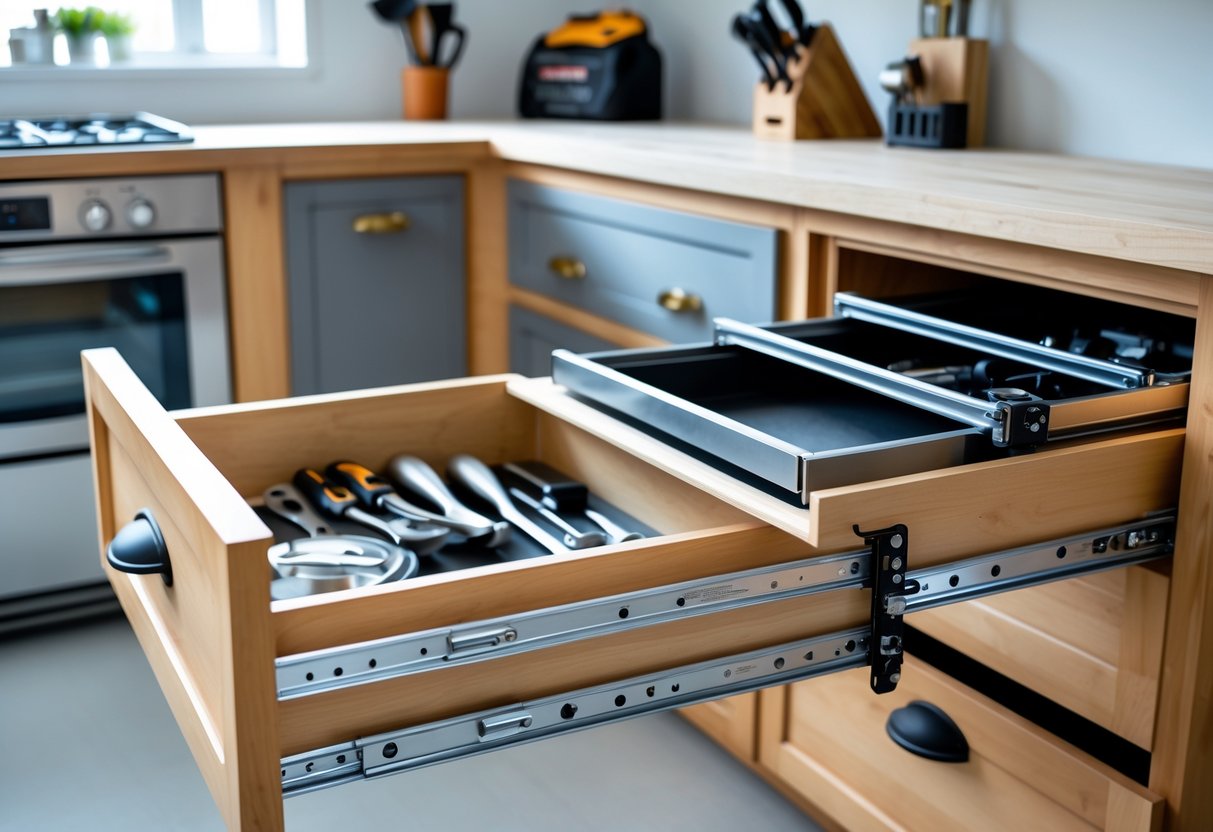
You’ll find drawer slides just about everywhere—helping things move smoothly, saving space, and keeping your stuff handy. Depending on how you use a space and what you need to store, the right slides can make a big difference.
Residential Furniture Applications
Drawer slides are kind of the unsung heroes in everyday furniture. Think about kitchen cabinets, dressers, nightstands, bathroom vanities—all those drawers you open without a second thought? That’s the slides at work. Full-extension and soft-close models are especially nice in busy spots like kitchens; they’re quiet, and you don’t have to fight with them.
Home offices these days often have keyboard trays or file drawers riding on slides, making the workspace more comfortable (and less cluttered). Upgrades like under-mount or side-mount slides can make custom cabinetry look sharp and work better. It’s worth paying attention to load ratings, too, if you want everything to last—nobody wants a saggy drawer.
Built-ins like closet organizers or entertainment centers? Those usually need stronger slides for bigger shelves or those sneaky hidden compartments. There’s a lot of flexibility in hardware, so you can really dial in your storage as your needs change.
Commercial and Industrial Storage Solutions
In commercial spaces—think offices, workshops, warehouses—drawer slides are everywhere. Heavy-duty slides keep tool chests, filing cabinets, and storage bins working smoothly, even when they’re loaded up. That strength is pretty crucial when you’re dealing with expensive gear or important files.
You’ll even find slides in galley systems on planes or ships, keeping storage bins steady when things get bumpy. Retail and medical spaces use them in carts, modular cabinets, and equipment stations to squeeze in more storage and keep things accessible.
Key Commercial Uses of Drawer Slides:
| Application | Importance |
|---|---|
| Filing Cabinets | Secure, organized records |
| Tool Storage | Easy heavy item access |
| Medical Equipment Drawers | Quick, stable operation |
| Retail Storage | Space-saving organization |
Specialized Cabinets and Drawers
Some cabinets just need something special. Pull-out pantries in kitchens, for example, need slides that can handle deep, tall drawers stuffed with cans and boxes. Garbage and recycling pullouts? Those slides get a workout and have to stand up to heavy, sometimes messy loads.
In labs or technical workstations, you want slides that move smoothly and precisely—nobody wants to fumble with a stuck instrument drawer. Lateral files and wide drawers might use more than one slide for stability, depending on size and weight.
And then there’s the cool stuff: hidden safes, secret compartments, or custom furniture with concealed drawers. Specialized slides keep things secure and discreet, opening up all kinds of design possibilities for unique storage solutions.
Types of Drawer Slides and Their Benefits
Picking the right drawer slide can make a huge difference in how your cabinets or furniture work and hold up over time. Each type brings something different to the table—installation, strength, how far they extend, and so on. It’s not always obvious which to choose, but getting it right pays off.
Side-Mount Slides
Side-mount slides are probably what most people picture. They attach to the sides of the drawer and cabinet, so you’ll need about a half inch of space on each side—something to keep in mind if your drawers are on the narrow side.
You can get them with ball bearings (which are smoother and hold more weight) or rollers (quieter, but not as strong). Ball bearing types are great for heavy drawers in kitchens or offices. These are usually pretty easy to install, and you can pop the drawer out for cleaning or repairs without much fuss. The trade-off: you lose a little bit of interior drawer width.
| Feature | Details |
|---|---|
| Installation | Side of drawer/cabinet |
| Load Capacity | Moderate to high |
| Max Extension | Up to full-extension |
| Accessibility | Good |
Undermount Slides
Undermount slides are tucked away under the drawer, so you don’t see them when the drawer’s open. That gives you a cleaner look and makes the most of your drawer’s width.
They’re a go-to for high-end cabinets and kitchen drawers—super smooth and quiet, and they can take a fair amount of weight. Most use ball bearings, and you can find soft-close or self-close options if you’re into that. Installation’s a little trickier, though. You’ll need to be precise with your measurements and drilling, and the drawers have to fit just right for these slides to work. But the end result? Pretty slick.
| Feature | Details |
|---|---|
| Installation | Underside of drawer box |
| Visibility | Hidden when open |
| Soft-Close Option | Common |
| Drawer Width Impact | Minimal |
Center-Mount Slides
Center-mount slides go right down the middle on the bottom of the drawer. You’ll usually see these in lighter furniture—think desks or little cabinets.
There’s just one slide, so installation is straightforward and there’s less hardware to look at. They’re generally quiet, but you’ll only get about three-quarters extension, so you might not be able to reach the back easily. Also, they’re not the best for heavy drawers, since there’s only one point of support. Still, they’re affordable and don’t eat up drawer space side-to-side.
Main Benefits:
- Almost no hardware visible inside the cabinet
- Keeps full drawer width
- Simple installation, fewer mounting holes
Ball Bearing and Roller Slides
Ball bearing and roller slides are what let a drawer move in and out—pretty important if you actually want to open and close the thing without a fight. Ball bearing slides roll on metal bearings, which makes them impressively smooth and tough. They’re quiet, too, and can handle a lot of weight. If you’re opening and shutting drawers all day, these are the ones you want.
Roller slides, on the other hand, rely on little plastic or nylon wheels. They’re often found in budget or lightweight furniture. Honestly, they’re quieter than you’d expect, but you probably wouldn’t want to overload them—they’re just not built for it.
You’ll find ball bearing slides in full-extension models, so you can pull the drawer all the way out and actually reach the stuff in the back (finally). Both types show up on side-mount slides, but ball bearing ones are common in undermount setups, too.
| Comparison Table | Ball Bearing | Roller |
|---|---|---|
| Smooth Operation | Excellent | Good |
| Weight Capacity | High | Moderate |
| Durability | High | Moderate |
| Noise Level | Moderate | Low |


